Learn Languages Through Shadowing
Listen to natural speech. Repeat it aloud. Improve your listening, pronunciation, and speaking skills with the shadowing method.
 Download on the App Store
Listen. Repeat. Speak Fluently.
What Is Language Shadowing?
Language shadowing is a speaking practice technique where you listen to a native speaker and immediately repeat what they say, trying to match their pronunciation, rhythm, and intonation. It is an effective way to develop speaking skills and make your speech sound more natural.
Unlike passive listening, shadowing requires you to actively listen and speak at the same time. You hear spoken language and reproduce it almost immediately, helping you improve your listening, pronunciation, rhythm, and intonation. Regular practice can also help you remember natural phrases and sentence patterns more easily.
The shadowing method works with any language. Whether you are learning English, Spanish, French, German, Japanese, or another language, the principle is the same: listen actively, repeat what you hear, and gradually learn to speak with a more natural pace and rhythm.
How AudioLingo Works
Three simple steps for effective language practice
Listen
Choose a phrase spoken by a native speaker. Listen carefully to the pronunciation, rhythm, and intonation.
Repeat
Repeat the phrase aloud right after the speaker. Try to closely match their pronunciation, pace, and intonation.
Speak
Speak along with the speaker in real time, following their pace and rhythm. The more you practice, the more natural your speech becomes.
Why Shadowing Helps Language Learners
The benefits of actively listening to and repeating native speech
Better Pronunciation
Listening to and repeating native speakers helps you reproduce the sounds, rhythm, and intonation of a foreign language. Regular shadowing can make your pronunciation more accurate and natural.
Stronger Listening Skills
Shadowing trains you to pay closer attention to individual sounds and syllables. Over time, it can become easier to follow fast speech, recognize individual words, and understand native speakers.
More Speaking Confidence
Regularly speaking phrases aloud helps you feel more comfortable using a foreign language. Shadowing gives you active speaking practice instead of relying only on grammar and vocabulary study.
More Natural Fluency
Shadowing helps you experience how a language sounds in real conversation. You become familiar with natural pace, rhythm, intonation, and common features of spoken language.
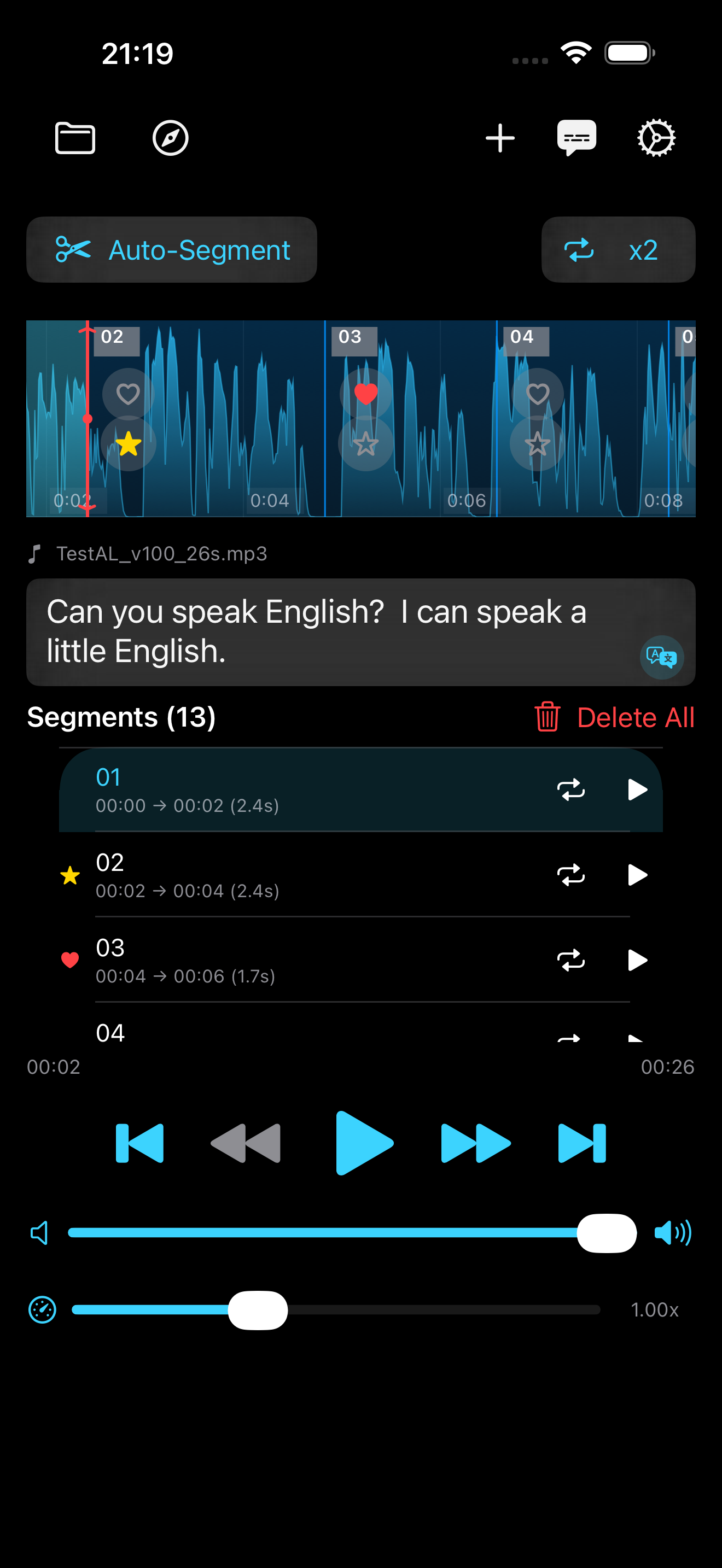
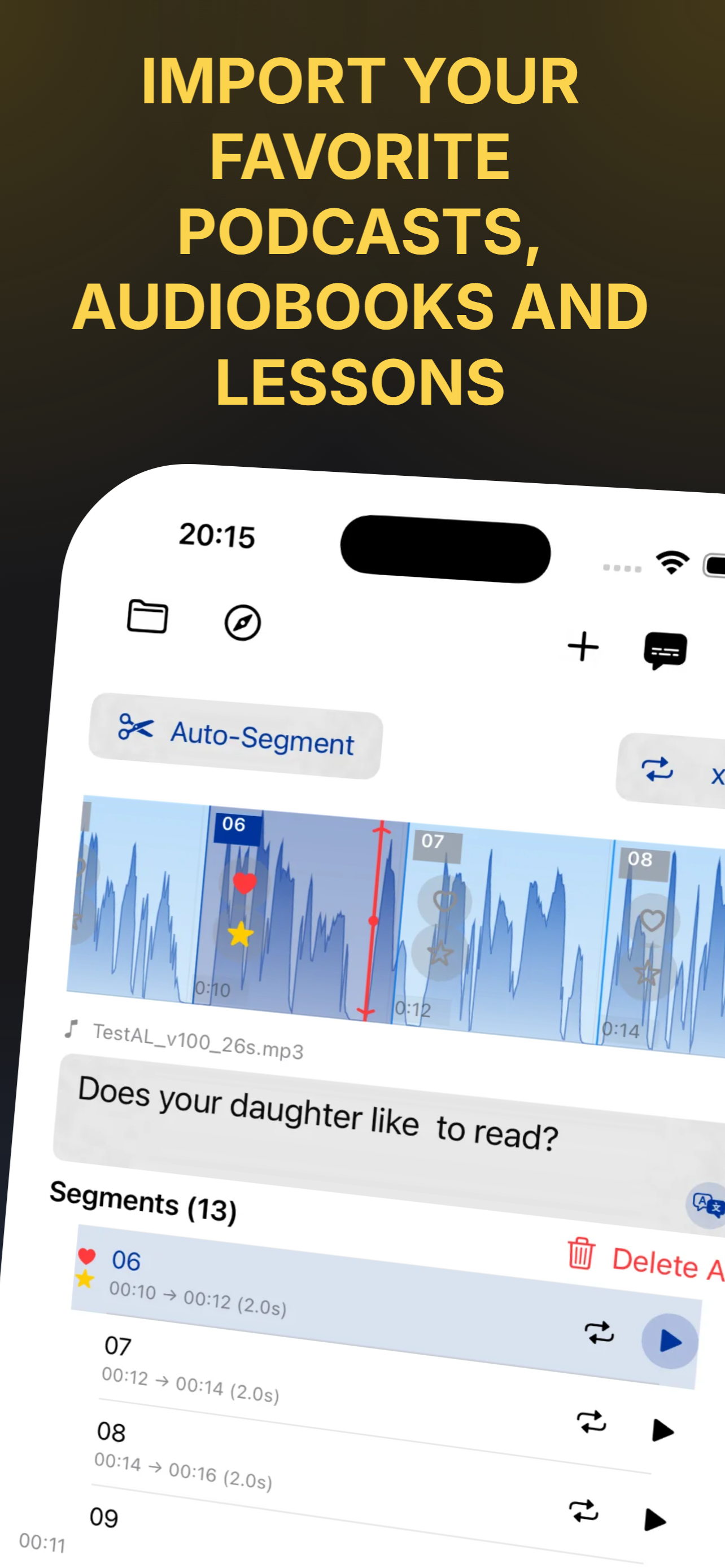
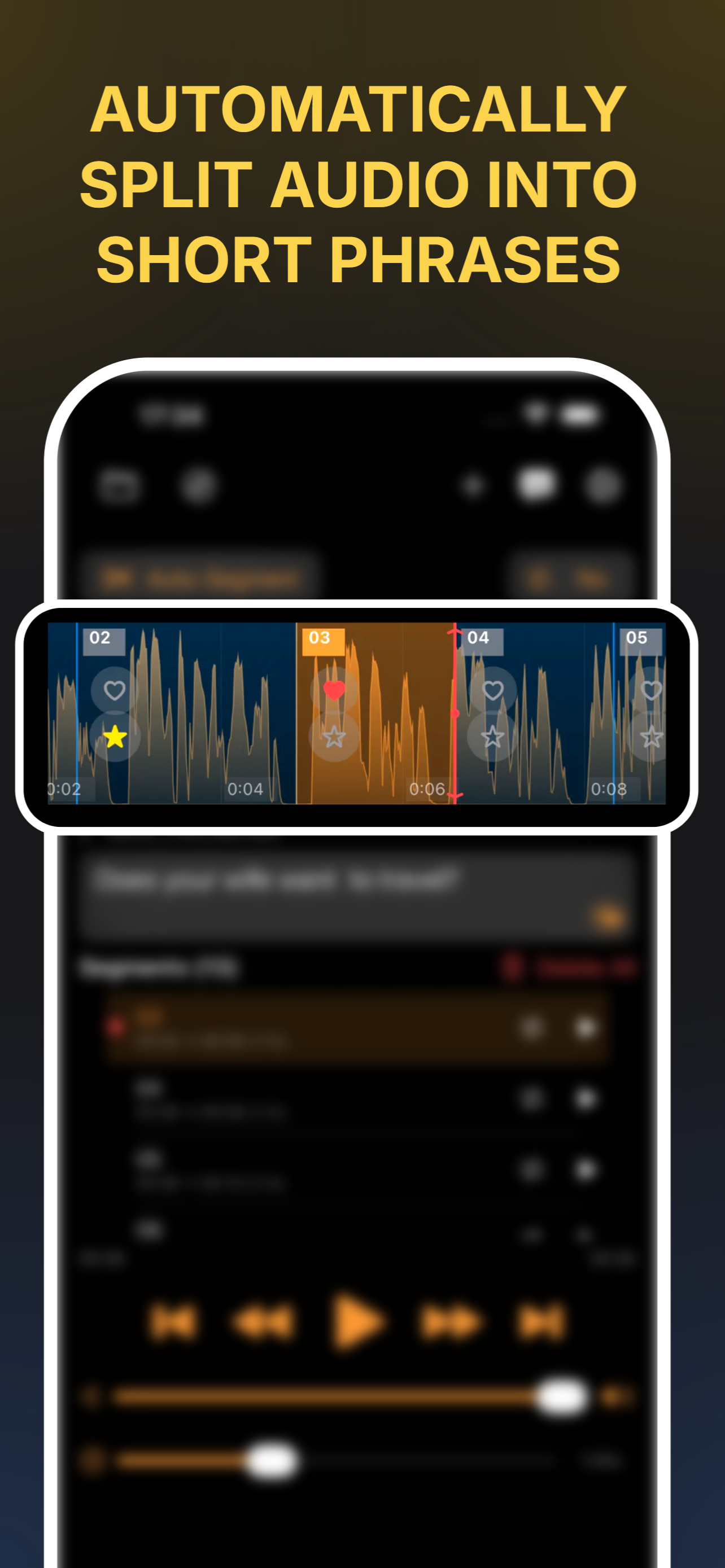
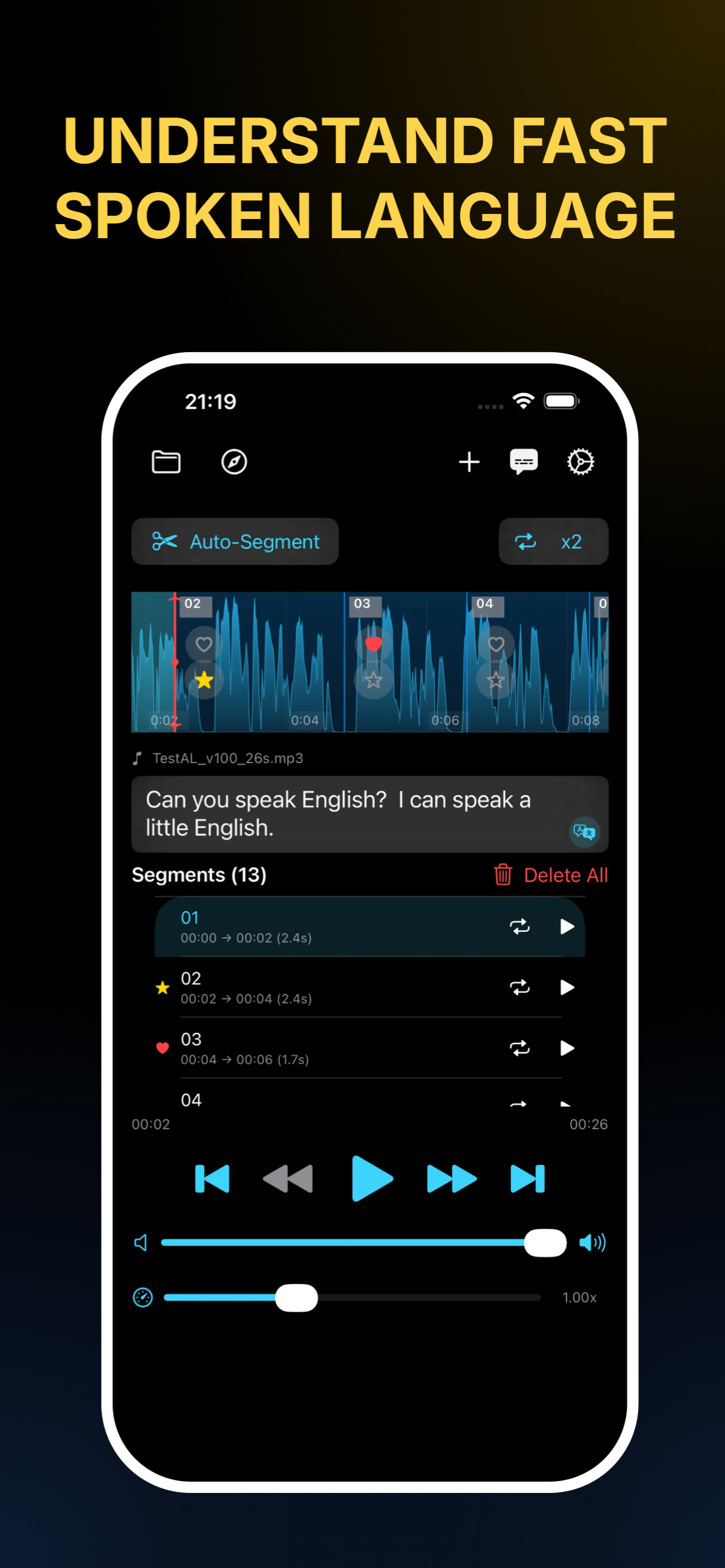
See AudioLingo in Action
A simple, focused interface designed for language practice
What You Can Practice
Four core language skills you can develop through shadowing
Listening
Train your ears to understand natural spoken language
Pronunciation
Practice the sounds, rhythm, and intonation of native speech
Speaking
Build fluency by repeating real spoken phrases aloud
Memory
Remember phrases and sentence patterns through active repetition
Who AudioLingo Is For
Language Learners
Supplement your language studies with real pronunciation and speaking practice. Shadowing helps you get used to the natural sound of a foreign language.
Travelers
Prepare for your trip by practicing useful everyday phrases. Build the confidence you need to communicate abroad.
Professionals
Improve your professional language skills and practice phrases you can use in meetings, presentations, negotiations, and everyday work conversations.
Practice Any Language
AudioLingo works with a wide range of languages
Frequently Asked Questions
Start Speaking More Naturally
Download AudioLingo and start practicing with natural speech today.